Do Lofi Channels Charge to Be Uploaded?
LoFi music is awesome! Y'all tin can listen to it while studying, driving the car, relaxing or when it's but a rainy day and you want to spend the day at abode.. but before I'll tell you how to make a LoFi shell let's talk near what LoFi is in the kickoff place.
What is lofi music?
LoFi music (short for depression fidelity, too known as Lo-Fi) is music that sounds similar information technology was recorded with "bad" or old equipment, which sometimes is actually the case, only doesn't necessarily need to exist. Some of those artifacts can be noise, vinyl crackles, distortion or imperfections in pitch and they can usually be recreated in your DAW without the need to buy expensive analog tape machines anything like that.
While the majority of modernistic producers arroyo a perfect event, with clean recordings and exact pitch, LoFi producers do the exact contrary.. but instead of just sounding "bad" it actually triggers certain emotions in us like nostalgia or melancholy.
Here's how to make a LoFi beat (step past step)..
Step 1: Sound Selection
Every genre has its own, unique characteristics so information technology's ever a expert thought to become yourself some plumbing fixtures pulsate samples and presets earlier opening up your DAW. I mean, technically it would exist possible to create a LoFi beat out with a Dubstep sample pack for example, but let's put that claiming to the side for another twenty-four hour period.
Here are some free LoFi packs yous can download before we move on:
https://bvker.com/lunar/
https://bvker.com/free-mellotron-presets-for-serum/
https://soundcloud.com/amazr-mastering/foley
They're basically filled with everything yous demand and licensed as royalty-free so you can use them for your own productions without having to worry about copyright problems 🙂
Step 2: Writing LoFi Chords
So at present that you hooked yourself up with some fitting sounds nosotros can get to work. I'll offset off with some simple music theory and will later on show you how to make your digital chords sound like real samples + how to actually work with real samples.
The Basics
Since I don't know exactly how much you already know most music theory I'll just start with the basics. The first thing you should do is picking a calibration. My tip: go for either A Minor or C Major. This way you tin use only the white keys (no worries, once yous're done with the chord progression y'all tin can transpose it to another key).
In this case, I decided to go for A Minor. This means that the routenote of my scale is A and that I can use all of the white keys to write chords and some squeamish melodies.
Now I'll show you how to build chords.
Offset, pick the keynote. Permit's say an A.
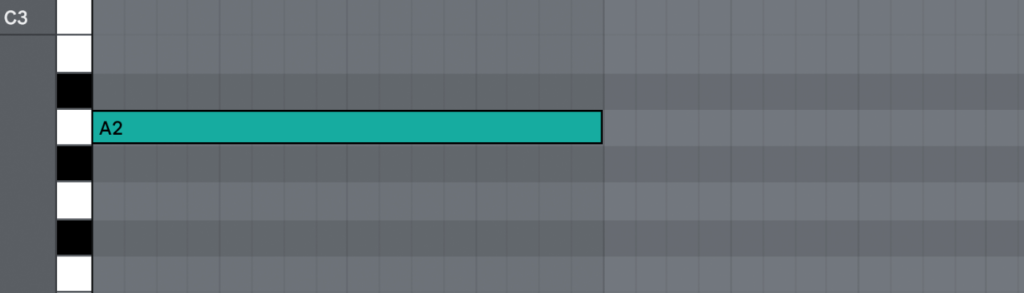
Skip one of the white keys and add a C. Skip a white cardinal again and write an East. This is how an A Pocket-size chord looks like:
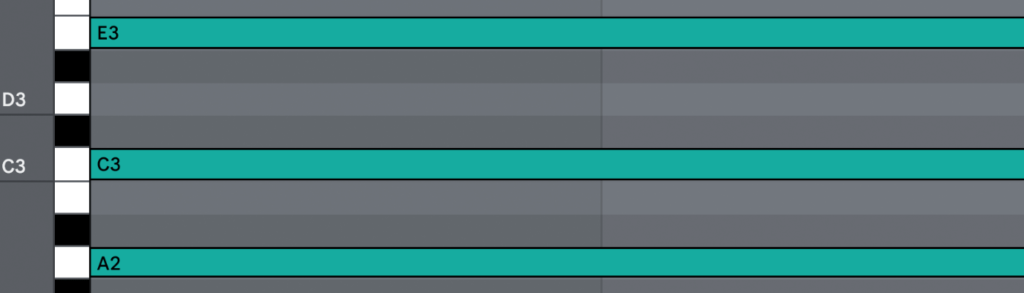
The special thing nigh LoFi chords is that you lot tin can go one stride further by skipping another white central and writing a G. Detect how "jazzy" this immediately sounds?

The cool part is that this is basically everything you need to know about writing chords. Just selection a keynote, skip a white key, skip some other white key and skip a white primal one more fourth dimension (the 4th note withal is optional).
Inversions
Once yous came up with a nice chord progression you can endeavour to add some "chord inversions"
Here's what this means:
I wrote these two chords using the technique I just described. Equally y'all can come across, the 2nd chord is significantly college than the first 1. Unfortunately big jumps like this don't always sound very pleasant.. merely that'southward not a big deal.
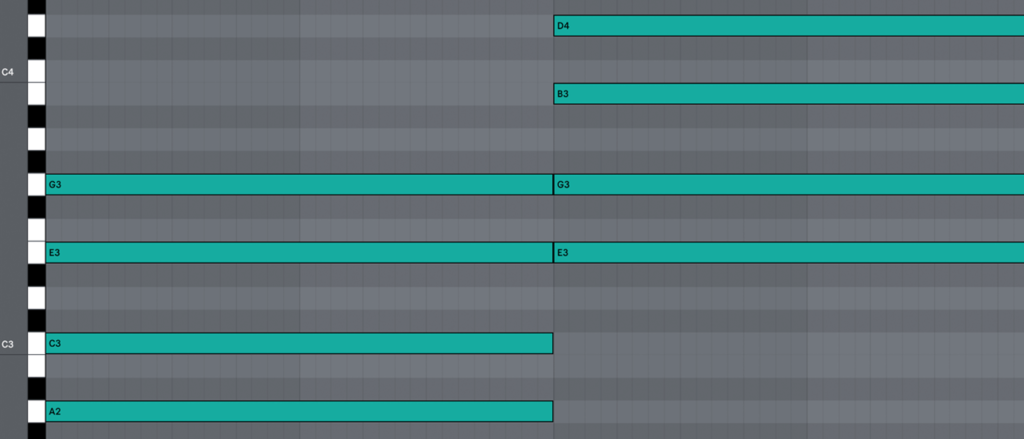
Only take the highest two notes and transpose them downwardly ane octave. As you can run across they're notwithstanding B and D, but the entire chord is closer to the start one.
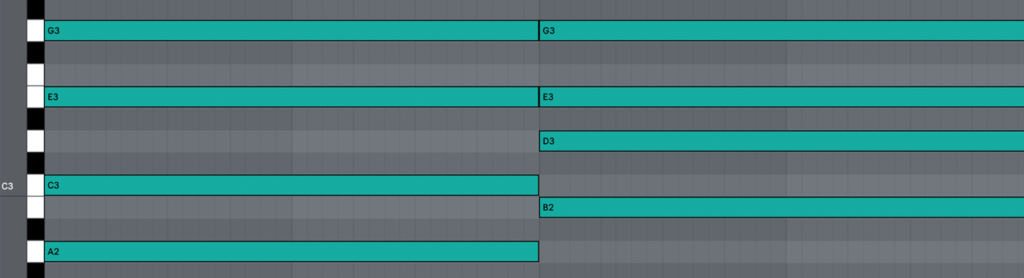
And if in that location's one last piece of advice I can give yous it would be this: Not every chord needs to exist exactly built like this. Sometimes you want to mute a annotation and sometimes you lot desire to write a note that doesn't fit in this scheme. Merely experiment a fleck until yous come up with something that sounds pleasant to your ears.
Humanizing
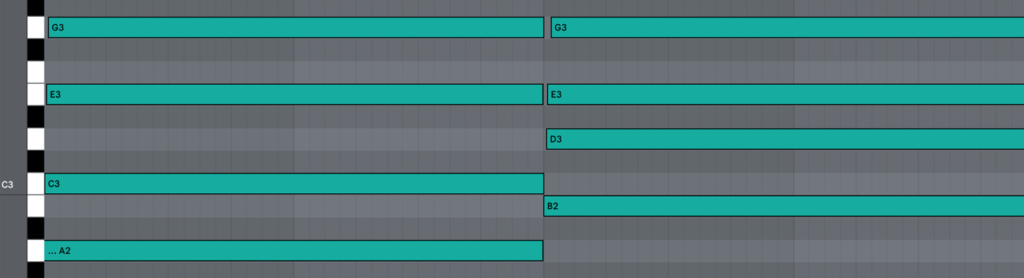
Since every chord nosotros wrote so far is perfectly in time the progression might sound a flake robotic. A real musician would never play perfectly in time similar this. So in club to brand everything sound more realistic you should disable the grid for a while and drag some notes slightly to the left or correct. One time you're washed y'all can get 1 stride further and play around with different velocity settings. Information technology can be a lot of piece of work until you got everything perfectly correct, just pocket-size details like this tin can really bring your song to life.
Audio Design
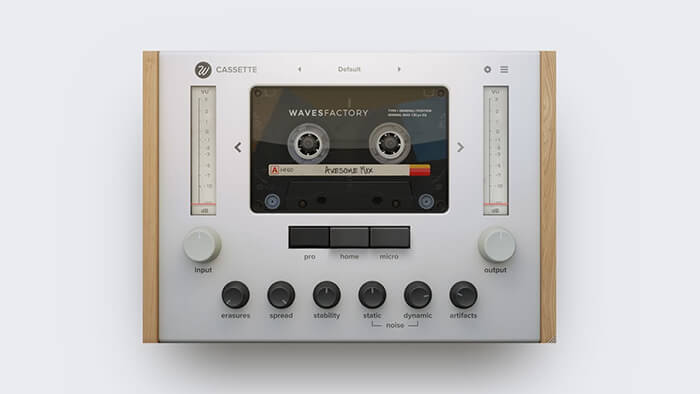
The next function I desire to talk nearly is the audio blueprint aspect of LoFi music. A lot of times LoFi beats are based on real instruments so you can attempt to find a squeamish piano, guitar or brass preset to get started. Once yous found a fitting instrument or synth preset it's time to add furnishings. For a choice of the best free & paid LoFi plugins check out this mail service I made a while ago.
Here's a short overview of the event categories you might want to add:
Filters:
One-time tape machines had a limited bandwidth so yous can't hear a lot of low or high-end in quondam recordings. To simulate this effect yous can cut off your sounds with high and low-pass filters.
Saturation and Baloney
Another imperfection of old recording equipment is baloney or more than subtle: saturation. You can try out dissimilar saturation plugins, tape emulations, bitcrushers or downsamplers.
Pitch
While creating a LoFi beat y'all unremarkably don't desire everything to be perfectly in key, and so you lot can either automate the pitchwheel or add together a plugin that gets the task done for you. One of the virtually popular choices in probably the RC-20 Retro Colour by XLN Audio (it as well comes with some other cool functions).
Other effects
Other effects you might want to add are modulation plugins like a chorus for example, a reverb or a stereo tool so you tin decrease the width. Non every track needs all effects at in one case and every arrangement is dissimilar and then just play around with some of this stuff until you find settings you're satisfied with.
Working With Samples
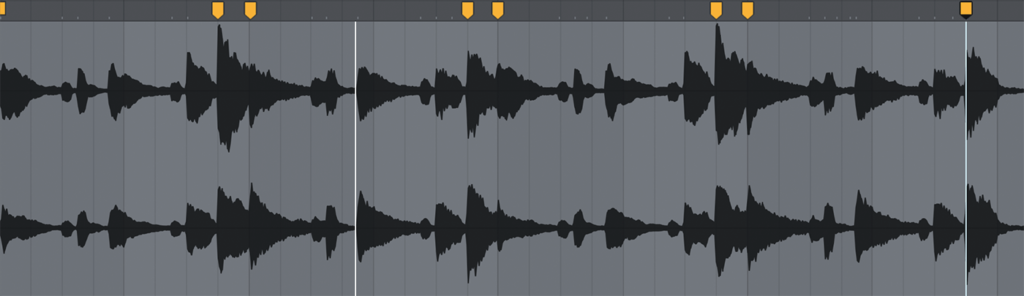
Afterward picking a sample the first thing you lot should try is finding the right tempo. As far as I know most DAWs have something like a "tap for BPM tool", merely if yours doesn't take ane integrated yous can check out this one hither (merely tap a key of your choice along with the beat).
Please go along in mind: If you really want to work with a sample you recorded from an sometime vinyl for example you should be enlightened that you demand to articulate the license before you upload the beat to whatsoever streaming platforms..
Since onetime recordings or vinyls in general don't always run in the verbal same tempo you might have to warp the sample later on in your DAW, then you can seamlessly loop it. Ableton Live users can cheque out this postal service for further instructions on warping.
In one case yous got the correct tempo it'due south fourth dimension to find out the keynotes of every chord. Load up a uncomplicated audio like a grand piano or a sine wave and use your ears to observe out which notes sound skilful together with the sample. In one case you found out all the key-notes you lot tin continue working with the sample in the aforementioned mode you'd work with "your own chords".
Step 3: Drums
1 of the most important tricks for getting the drums right is sound selection. Fortunately y'all already hooked yourself upward with a decent option of drum samples (if you lot read through the whole commodity from the commencement on). Let'southward jump right to the drum placement. I'd personally start by placing a snare on every second quarter note.
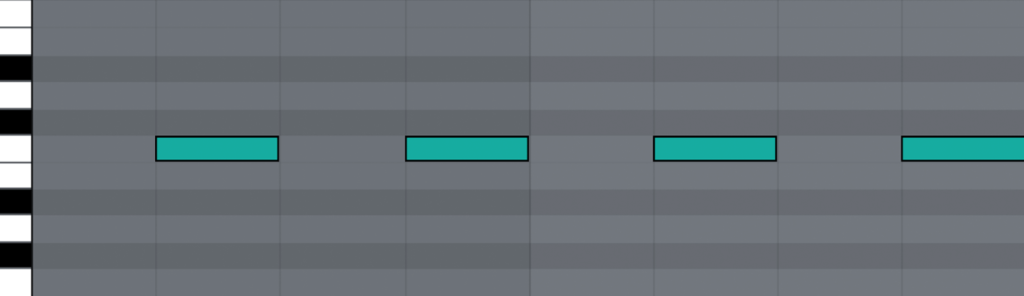
For a "lazy" experience yous can try to delay the snare track by a few milliseconds.
Now selection a cool kick drum and try to come upwards with a pattern that matches your chord progression. If yous accept a drum pad or MIDI keyboard try to record the blueprint rather than drawing it. If you don't accept admission to a MIDI controller right now endeavour to give some of the hits lower velocity settings and try to fix them slightly off-filigree (each ane in a different way). Next up yous can add together hats and other cymbals.
And hither comes the biggest mistake I see a lot of producers doing:
They only pick one of the first samples, stick to it and then try to mix everything.. just why is this a mistake? Because the sound selection needs to exist on point before y'all even think about mixing. So after y'all came upward with a nice pulsate pattern you should go through all of your samples again and try to discover a better boot, a better snare and perchance a lid that fits your system even amend.
I know this sounds boring, but believe me: this will drastically improve your mixes! 😉
Stride iv: Bass
Call up the "music theory" we discussed earlier? Bully, because the keynotes of each chord are exactly the notes your bass should play. You tin can showtime by copying the MIDI file from the chords to the bass track. Leave only the primal notes and delete everything else:
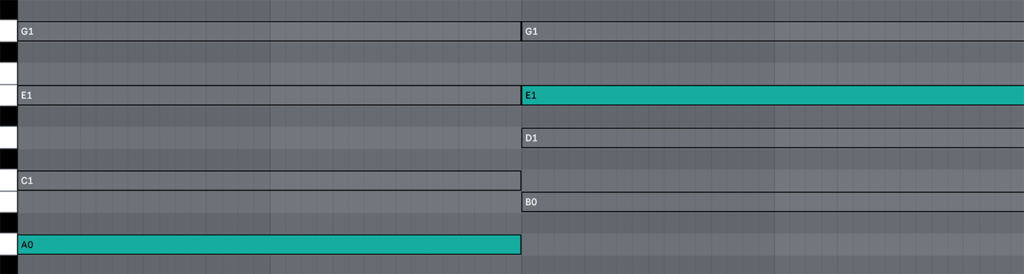
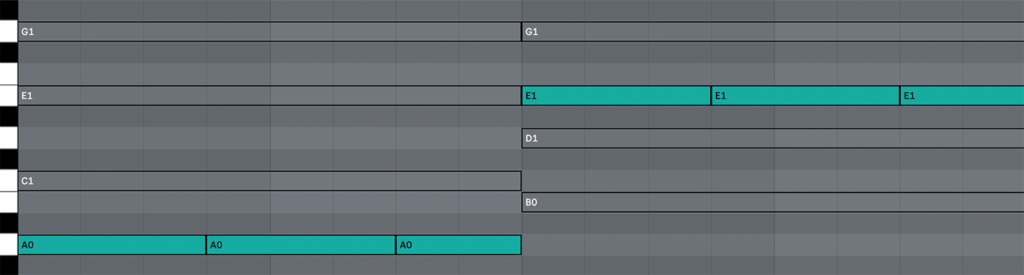
This design should work, only probably sounds a fleck boring, right? To fix that you can either let the bass play in a faster rhythm similar this for example:
Or you simply add some transition notes. Just make certain that these transition notes are always part of the chord that's playing at this moment. Like this for case:
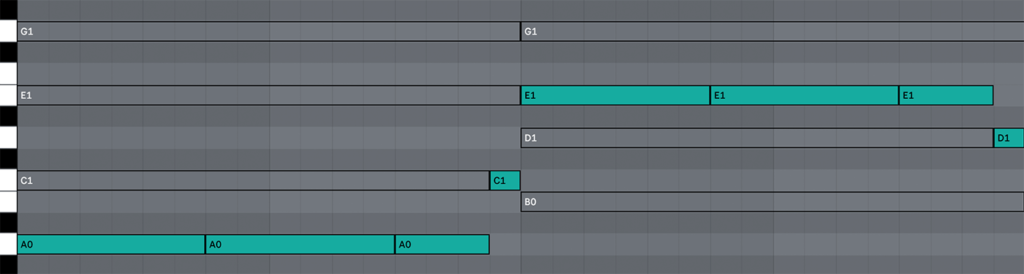
Regarding the sound choice you tin can try to observe a cool sample of an acoustic bass or you lot just selection a pure sine wave (maybe with a fleck of saturation).
Step five: Ambient
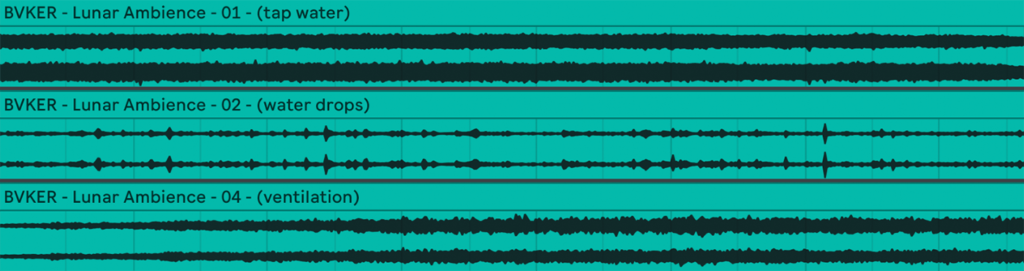
One pop technique amidst LoFi producers is calculation recordings of "real situations" in the background of their tracks. These recordings can be annihilation like rain, a railroad train station or a bonfire. In order to requite your tracks some unique character y'all tin can try to record these ambiences on your own. This is typically done with a field recorder, but since we're talking about LoFi your smartphone should probably get the chore done.
Footstep 6: Vocals
Since LoFi beats are rather depressing and have a sad vibe a lot of times many LoFi producers add vocals from old interviews or televised snippets to their beats. Just search for something like an "sometime schizophrenia interview" on YouTube. Chopp upward the best parts and add them to your track, just remember: If y'all're planning to release the vocal on Spotify etc. you lot should do your research regarding the copyright. You don't want to get sued when the track blows upwardly 😀
Stride vii: Mixing & Mastering
Ok, let'south say you came up with a nice chord pression, added some cool effects to get in sound "older". You lot added some sloppy drums and compared 1 shots until you constitute the perfect ones for your arrangement. Ambience recordings and maybe some vocals take been added and you lot arranged everything until the beat out is near finished.
Time for mixing..
If you're a producer who normally struggles a bit with mixing I accept ii great news for y'all. First, since you already compared dozens of 1 shot drum samples you probably don't have to add any effects to your drums. 2nd, it'due south a LoFi crush so information technology doesn't demand to sound perfect.
Reference Tracks
Selection two or three skilful sounding reference tracks that are quite like to your beat. Drag them into your project file and compare the levels of all individual tracks. This way you lot can detect out if some elements of your mix (the kick drum for example) are too loud.
Once you've balanced all tracks it's time to take a look at the overall frequency spectrum. Has your track to much low frequencies or high end compared to the reference tracks? If your track has significant differences you might desire to change that in the mix.
Tip: Don't attempt to be too precise while mixing and mastering. It's withal LoFi then your beat doesn't demand to sound perfectly cleaned up and polished.
Mastering
Earlier you offset to slap any effects on the chief aqueduct yous should be happy with your mix.. and if your mix already sounds good there commonly isn't much to do on the master. Maybe a trivial scrap of charabanc compression or some tiny EQ adjustment, but that'southward it. Add together a limiter, ready the ceiling to -ane dB (aye this is actually recommended by Spotify) and adjust the threshold/input until the gain reduction starts to kick in a bit.
Don't drive the limiter to hard when mastering LoFi beats
Conclusion
If you read through the whole postal service you should know the basics of making LoFi beats. At present it's up to you. Open your DAW and first playing around with all of those techniques! Reading and learning is fine, just all this information is useless without a lot of practice. Oh.. and if yous enjoyed the mail service you lot might also like this tutorial on how to make Synthwave.
hinklelikeriatues.blogspot.com
Source: https://bvker.com/how-to-make-a-lofi-beat/
0 Response to "Do Lofi Channels Charge to Be Uploaded?"
Post a Comment